
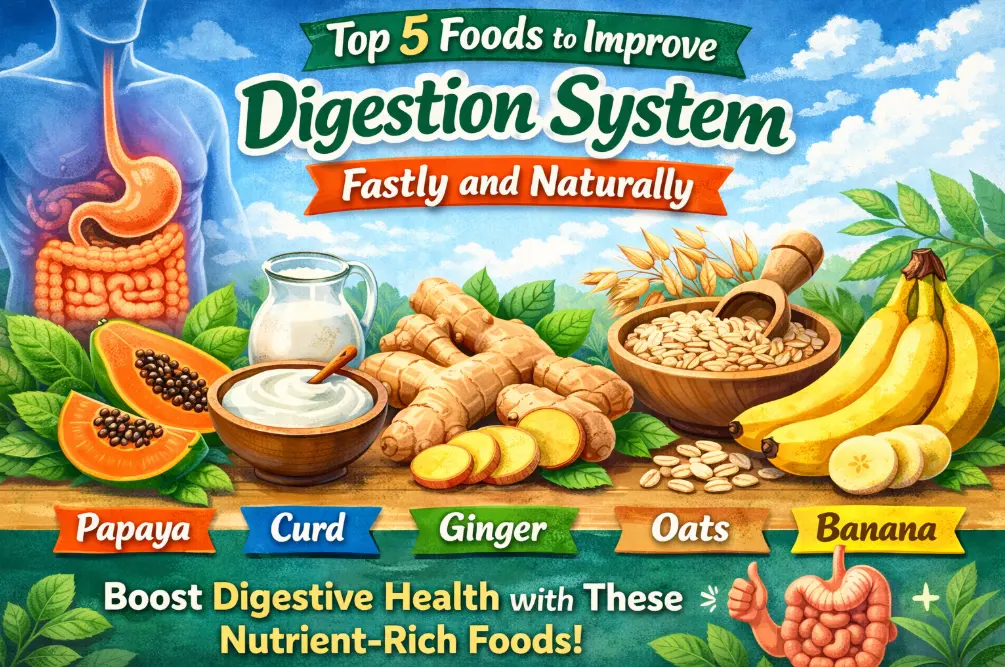
A healthy digestion system is the foundation of overall wellness. Poor digestion can result in issues such as gas, bloating, acid reflux, constipation, fatigue and even weak immunity. In today’s fast-moving lifestyle—especially in India, where heavy and spicy food, irregular meals and stress are common—digestive problems are very frequent.
The good news? You don’t always need medicines. Adding certain tender foods to your everyday meals can help fix your digestive system naturally and quickly. In this article, we discuss the top top 5 foods that support better digestion, what they do, and how to consume them for maximum benefit.
Top 5 Foods That Improve Digestion Naturally
Here are the five best foods known for improving digestion quickly and safely:
- Papaya
- Curd (Yogurt)
- Ginger
- Oats
- Banana
So, what does each of these foods do and how do they work best in our bodies?
1) Papaya – The Natural Digestive Booster
Papaya is one of the most effective natural fruits for fast digestion. It contains a digestive enzyme called papain, which helps break down proteins and makes food easier to digest. Papaya is also rich in dietary fiber, which promotes healthy stool movement and prevents constipation.
Eating ripe papaya regularly helps relieve bloating, gas, heaviness, and acidity after meals. It is light on the stomach and beneficial for weak digestion.
How Papaya Improves Digestion
- Contains papain enzyme to break down proteins
- Rich in soluble dietary fiber
- Supports smooth bowel movement
Digestive Benefits of Papaya
- Relieves constipation
- Reduces gas and bloating
- Improves gut movement
- Helps prevent acidity
Best Way to Eat Papaya
- Consume 1 bowl of ripe papaya in the morning
- Eat after lunch for better digestion
- Avoid unripe papaya
Consuming papaya daily can help improve digestion naturally.
2) Curd (Yogurt) – Builds a Healthy Gut
Curd is very good for gut health as it contains probiotics or good bacteria. These bacteria help maintain balance in the digestive system and improve nutrient absorption.
Regular consumption of curd helps keep acidity, indigestion, diarrhea, and other stomach problems under control. Homemade curd is preferred over packaged yogurt as it is preservative-free. Eating plain curd with meals cools the stomach and improves digestion over time.
Why Curd Is Good for Digestion
- Rich in probiotics
- Improves gut microbiome
- Supports digestion and nutrient absorption
Digestive Benefits of Curd
- Improves gut health
- Reduces acidity and indigestion
- Helps control diarrhea
- Strengthens digestion over time
Best Way to Eat Curd
- Eat homemade plain curd with lunch
- Add roasted cumin or rock salt
- Avoid consuming curd at night, especially if you have sinus or acidity
Having curd daily after meals is a healthy digestive habit.
3) Ginger – A Powerful Natural Digestive Aid
Ginger is a powerful natural remedy for digestion problems and has been used for thousands of years. It stimulates digestive enzyme production and improves stomach movement, allowing food to pass easily through the digestive tract.
Ginger helps eliminate gas, bloating, nausea, and indigestion, and relieves gastric pain after heavy or oily meals. Regular intake improves digestion and keeps acidity under control.
Also Read: 5 Amazing Benefits of Eating Papaya Every Day
How Ginger Improves Digestion
- Stimulates digestive enzymes
- Improves stomach movement
Digestive Benefits of Ginger
- Reduces gas and bloating
- Relieves nausea
- Improves digestion after heavy meals
- Reduces stomach discomfort
Best Ways to Consume Ginger
- Ginger tea after meals
- Add grated ginger to vegetables or dal
- Diluted ginger juice with warm water
Ginger works fast and is one of the best home remedies for digestion.
4) Oats – Fiber-Rich Food for Smooth Digestion
Oats are rich in soluble fiber, which promotes healthy digestion. Fiber adds bulk to stool, making it easier to pass and preventing constipation. Oats also support the growth of good gut bacteria essential for long-term digestive health.
Regular consumption helps reduce acidity, bloating, and stomach heaviness. Oats are light and easy to digest.
How Oats Help Digestion
- Fiber improves bowel movement
- Supports healthy gut bacteria
Digestive Benefits of Oats
- Prevents constipation
- Improves bowel regularity
- Reduces acidity
- Keeps the stomach light
Best Way to Eat Oats
- Oats porridge for breakfast
- Oats with vegetables for lunch
- Avoid sweetened or flavored instant oats
Oats are especially useful for people with slow digestion.
5) Banana – Gentle and Gut-Friendly Fruit
Banana is one of the easiest fruits to digest and is ideal for people with sensitive or weak digestion. It contains pectin, a natural fiber that regulates bowel movement and improves digestion.
Banana helps reduce acidity, soothes the stomach lining, and provides instant energy without irritating the intestines. It is helpful in both constipation and loose stools.
Why Bananas Are Good for Digestion
- Rich in pectin fiber
- Soothes stomach lining
- Supports gut health
Digestive Benefits of Banana
- Helps in constipation and diarrhea
- Reduces acidity
- Provides quick energy
- Supports gut health
Best Way to Eat Banana
- Eat 1 banana in the morning
- Mix with oats or curd
Banana is affordable, easily available, and safe for daily consumption.
Tips to Enhance Digestion Naturally
- Drink enough water
- Eat meals on time
- Chew food slowly
- Avoid overeating
- Reduce fried and junk food
- Take a 10–15 minute walk after meals
These small habits help improve digestion naturally.
Foods to Avoid for Better Digestion
- Deep-fried items
- Excess spicy food
- Processed snacks
- Sugary drinks
- Too much tea or coffee
Avoiding these foods helps reduce acidity and bloating.
Final Thoughts
Good health starts with a well-functioning digestive system. Including papaya, curd, ginger, oats, and banana in your daily routine can improve digestion naturally without medicines.
These foods are simple, economical, and very Indian. Regular consumption supports a healthy diet, improves digestion, reduces stomach discomfort, and increases energy levels.
Thank you for visiting FSI Blog! We appreciate your time and interest. Explore our latest insights, trending topics, and helpful guides. Stay connected for fresh updates and valuable information.
About the Author