The salesperson at the electronics store makes it sound effortless. “No-cost EMI, sir, just sign here.” And sometimes store EMI genuinely is the better deal. But not always, and the gap between the two options can run into thousands of rupees over the life of the purchase.
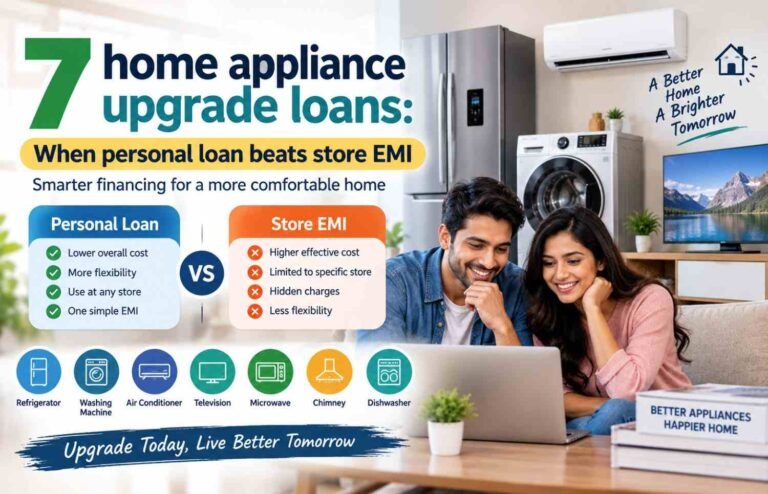
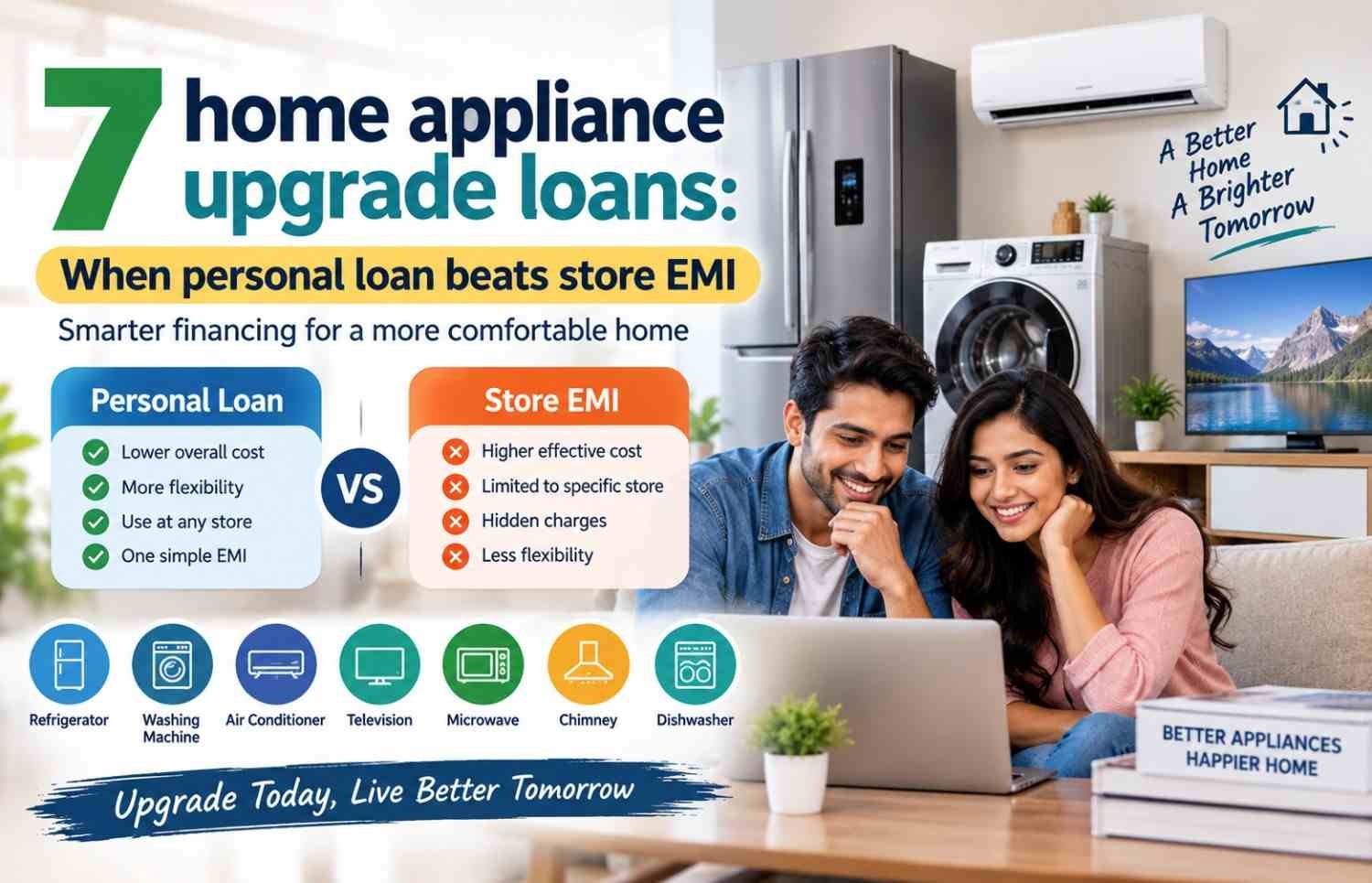
A personal loan sometimes beats store EMI outright, especially once you factor in processing fees, the fine print on “no-cost” offers, and what you can do with a personal loan that a store plan locks you out of.
Here are seven appliance-upgrade situations where a personal loan is the smarter call.
How Do Personal Loans and Store EMI Actually Differ?
They look similar at the counter. Under the surface, they are quite different.
Store EMI is tied to one purchase at one retailer, arranged through the store’s finance partner. The “no-cost” version means the interest is absorbed into the price or offset by a discount you forgo, rarely truly free once you read the terms. Processing fees, down payments, and card-specific conditions often apply.
A personal loan is money in your bank account that you spend however you like. It carries an interest rate and fees, but it is flexible, not tied to a single store, and comparable across lenders on personal loan interest rates. The question is never “which is cheaper in the abstract”; it is “which is cheaper for this specific purchase, on these specific terms.”
7 Situations Where a Personal Loan Beats Store EMI
1. When the “No-Cost EMI” Isn’t Actually No-Cost
Many no-cost offers quietly bake the interest into the price or require you to give up a cash discount. Once you lose a 10% upfront discount to get the EMI, a personal loan at a competitive rate can come out cheaper. Do the total-cost comparison, not the monthly-EMI comparison.
2. When You’re Buying Multiple Appliances at Once
Kitting out a new home, fridge, washing machine, AC, microwave, across different stores means juggling several store EMIs with separate terms. One personal loan covers the lot, from any retailer, with a single EMI and one set of terms to track.
3. When the Store’s Processing Fee Is High
Store EMI often carries a processing fee of ₹500 to ₹2,000 per purchase, plus GST. Across several appliances, that stacks up. A single personal loan has one fee, not one per item.
4. When You Want the Lowest Interest Rate You Qualify For
Store EMI rates are fixed by the retailer’s finance partner. A personal loan lets you shop lenders for the lowest personal loan interest rate your profile qualifies for. A prime borrower with a strong CIBIL Score can often beat the store’s rate outright.
5. When You Might Want to Prepay
Store EMI plans are rigid; the schedule is the schedule. A personal loan from a Nil-foreclosure lender like Stashfin lets you prepay when a bonus arrives, cutting the total interest. Flexibility the store plan does not offer.
6. When You Already Have a Store EMI at a Bad Rate
If you are midway through an expensive store EMI, a personal loan balance transfer can move that debt to a lower rate. Take a personal loan at a better rate, clear the store EMI, and repay the personal loan instead, saving the difference in interest across the remaining term.
7. When You Want to Build Credit History
A personal loan repaid on time reports to CIBIL and builds your credit profile. Some store EMI arrangements report inconsistently or not at all. If credit-building is a side goal, the personal loan does double duty.
How Does a Personal Loan Balance Transfer Work for Appliances?
This is the move most people do not know they have.
Say you took a store EMI at 20% effective interest for an ₹80,000 appliance haul, and you are a year in with a chunk still outstanding. A personal loan balance transfer means taking a fresh personal loan, at a lower rate if your profile qualifies, using it to clear the store EMI in full, and then repaying the new loan instead.
The maths works when the new rate is meaningfully below the old one, after accounting for the new loan’s fees. On a large outstanding balance at a high store rate, the saving can be substantial. Compare the total remaining cost of the store EMI against the total cost of the personal loan before switching, if the personal loan wins, transfer.
When Is Store EMI Actually the Better Choice?
To be fair, store EMI wins in some cases.
A genuinely no-cost EMI, where you keep the discount and pay zero interest, on a single appliance is hard for a personal loan to beat. So is a small purchase where a personal loan’s fees would outweigh any rate advantage. And for a borrower with a weak CIBIL Score who would only qualify for a high personal loan rate, the store’s partner rate might actually be lower.
The honest rule: compare total cost, case by case. Store EMI isn’t a trap, and a personal loan isn’t always cheaper. The winner depends on the specific purchase, the specific offer, and your specific credit profile.
Compare Total Cost, Not the Monthly Number
The salesperson’s “no-cost EMI” and a personal loan aren’t enemies; they are two options, and one is cheaper for your specific purchase. The only way to know which is to compare total cost, not the monthly EMI or the headline pitch.
For multiple appliances, a high store processing fee, a desire to prepay, or an existing store EMI at a bad rate, a personal loan often wins, especially from a lender offering competitive personal loan interest rates and Nil foreclosure, like Stashfin, so you keep the flexibility to clear it early. For a single appliance on a genuine no-cost offer, the store plan may be fine.
Run the numbers both ways, and let the total cost decide.
About the Author